Hope in the Middle
David McGinley | 04.03.26
What are you looking forward to? In the middle of your day, your week, your busy life, what do you find yourself holding out for or daydreaming about as you push through the challenges that each day demands? For me, it’s always trips. Nothing too crazy or exotic – just the same familiar places, views, experiences, smells and tastes that have brought me comfort and joy in the past. Every time I come back to “normal,” I can’t help but count the days until I get to return. Maybe it’s the memories, maybe it’s the escape, but I love the chase. Is that a bad thing? I hope not!
Hope. What is hope? I mean, I hope my team wins. I hope my kids do well in school. I hope they accept our offer on the house. Am I saying that right? Is that what hope means?
Hope is mentioned throughout the Bible. A few verses come to mind. Romans says, “Now hope that is seen is not hope. For who hopes for what he sees? But if we hope for what we do not see, we wait for it with patience.” Hebrews tells us, “Now faith is the assurance of things hoped for, the conviction of things not seen.” And in 1 Thessalonians, the writer says, “We do not want you to be uninformed, brothers, about those who are asleep, that you may not grieve as others do who have no hope.” From these verses, there are a few things I think we need to hold onto.
First, if you can see it, you don’t have to hope for it. I don’t have to wish for a reality that is already visible in front of me. I don’t have to hope my team wins if the game is already over. The biblical idea of hope is that we look forward to a future reality, believing it has already been accomplished, even though we haven’t laid eyes on it yet. We possess full assurance that the reality exists and the outcome is not still up in the air.
That brings us to the second observation: Faith is the assurance that fuels hope. Faith says, “I don’t need evidence because I am the evidence.” This doesn’t mean blind faith. We don’t just have faith in faith. We have faith in a person or an object. Faith is dwelling confidently inside a building while a storm rages outside, trusting that the structure will protect you. Faith says, “Even though I walk through the valley of the shadow of death, I will fear no evil, for YOU are with me.” I can experience hope because I have faith in these things.
Lastly, hope changes the way we walk through grief and suffering. Whether you know Jesus or not, life is filled with hard things. Faith doesn’t exempt us from suffering. It means we have someone to walk with us through it, so we don’t have to face it alone. For believers, it also means there is a day coming when suffering will end. That promise allows us to live with endurance and patience as we HOPE for that day.
But it is not that day yet. For now, we are stuck in the middle.
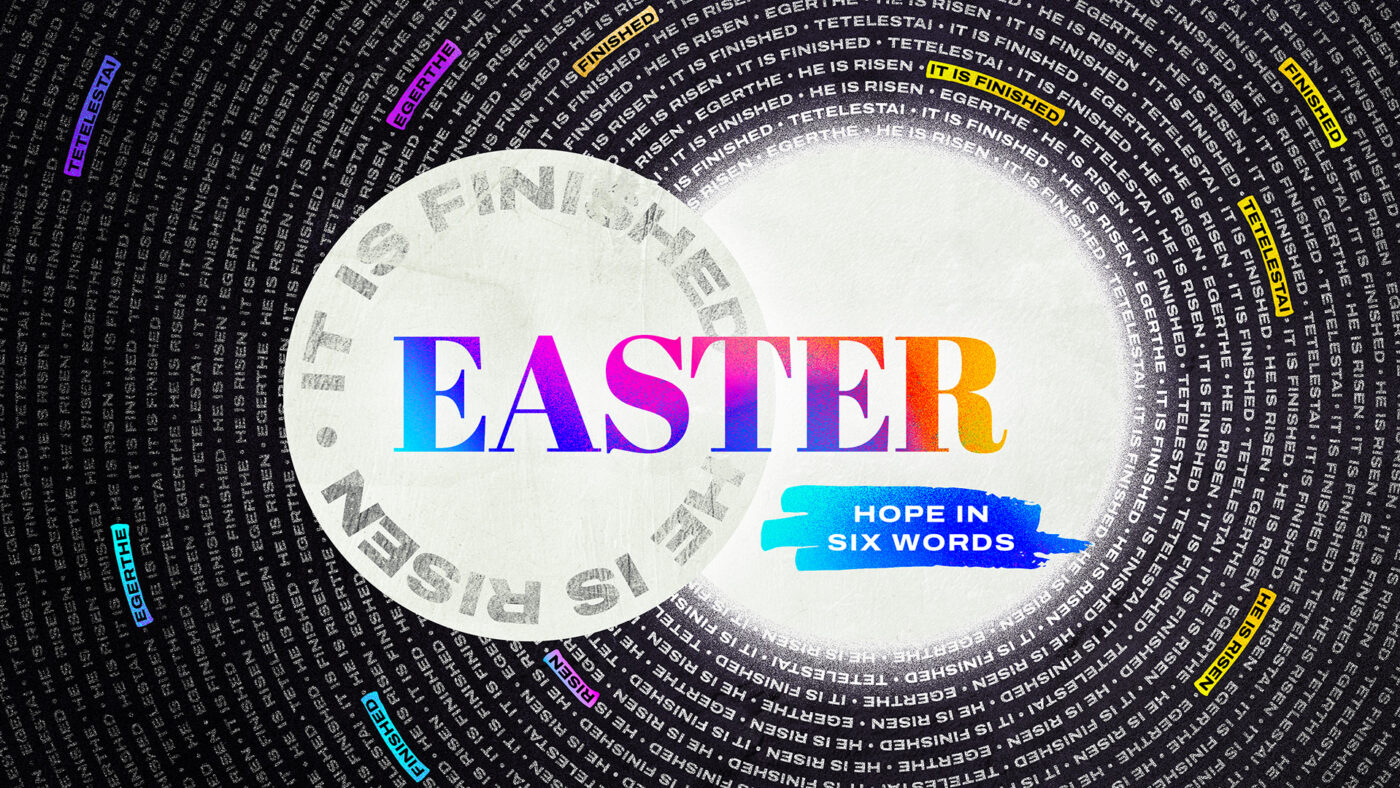
There are two phrases from the gospel story that carry enormous weight. In Greek, they are tetelestai and egerthe. In English: “It is finished” and “He is risen.” As you read those words, you might agree they are encouraging. But the events that took place between those two declarations did not inspire the same enthusiasm.
On the cross, “It is finished” were among the final words Jesus spoke before He breathed His last. But what was finished? For those who witnessed it, the circumstances were anything but hopeful. The man they had followed for three years – the teacher, the leader, the one they believed had come to change everything – was gone. He was arrested, prosecuted, convicted, sentenced and executed all within six to nine hours. Less than a week before, they were waving palm branches in the streets, celebrating the arrival of a king and believing they would finally be free from Roman oppression. Justice felt close. Peace seemed possible. Until it wasn’t. Their hero was gone. And now, because they were His followers, maybe they were next. Welcome to the middle.
Friday was passing and the Sabbath was coming – a day of worship and rest. A day of hope. But not this Saturday. This Saturday was the day after. You know that day. The day after you got the news. The day after you were fired. The day after the diagnosis. The day after you didn’t get a chance to say goodbye. The day after everything came to a sudden stop. You’ve cried, you’ve screamed and now you’ve woken up and realized it wasn’t a bad dream. Now there is nothing left to do but live.
A few years ago, I spent time with a pastor at a retreat who had walked through some genuinely hard things in life and in ministry. He encouraged us to view our circumstances through the lens of the gospel story. He said that 10% of life is like Good Friday – the moment you experience unforeseen and unimaginable pain. It is sudden. It is real. But it is only 10%.
Another 10% is Easter Sunday. Joy. An answered prayer. The treatment worked. You got the job. They came back. It’s time to celebrate! These are the moments we daydream about, and we should enjoy them and let them fuel us.
So what is the remaining 80%? It’s the middle. It’s Saturday. The pain of yesterday is not fully healed and the joy of tomorrow hasn’t arrived. This is where we spend the majority of our lives. So how do we survive? How do we stay balanced enough to put one foot in front of the other? Hope.
When I heard that pastor present this idea, I said what I imagine many of you are thinking: “Jesus has been risen for a long time. It’s not Saturday anymore. It’s Tuesday! So who decides what day we are living in?” His answer shocked me. “You do.” Because the tomb is empty, the pain of Friday doesn’t carry the same sting it once did. That doesn’t mean suffering isn’t real. It means we now have the opportunity to view our suffering through the lens of the empty tomb. If God was able to bring His dead Son out of a cold, dark tomb after three days, then He can bring hope and joy and peace into whatever you are walking through right now. Hope, joy and peace are available on demand in the life of a believer no matter what day it is because egerthe. He. Is. Risen.
You can’t always control your circumstances, but you can always control how you respond to them. The middle is hard because the middle is real. But so is heaven. So is the promise of hope and victory. We don’t just hope things will turn out in the end – we know they will. Peter called it a “living hope.” That means hope doesn’t need us to breathe life into it. Hope is alive because Jesus is alive. And because He rose, we will also rise to a place where the suffering and pain of this life will be gone forever. We look forward to when 10% becomes 100% and a season turns into eternity with Jesus. That is why we can “consider that the sufferings of this present time are not worth comparing with the glory that is to be revealed to us.” That is when hope is no longer needed, because we will see Him face to face. As Revelation 21 says, “He who is seated on the throne said, ‘Behold, I am making all things new.’” So for now, have hope in the middle. It may be Saturday, but Sunday is surely coming.